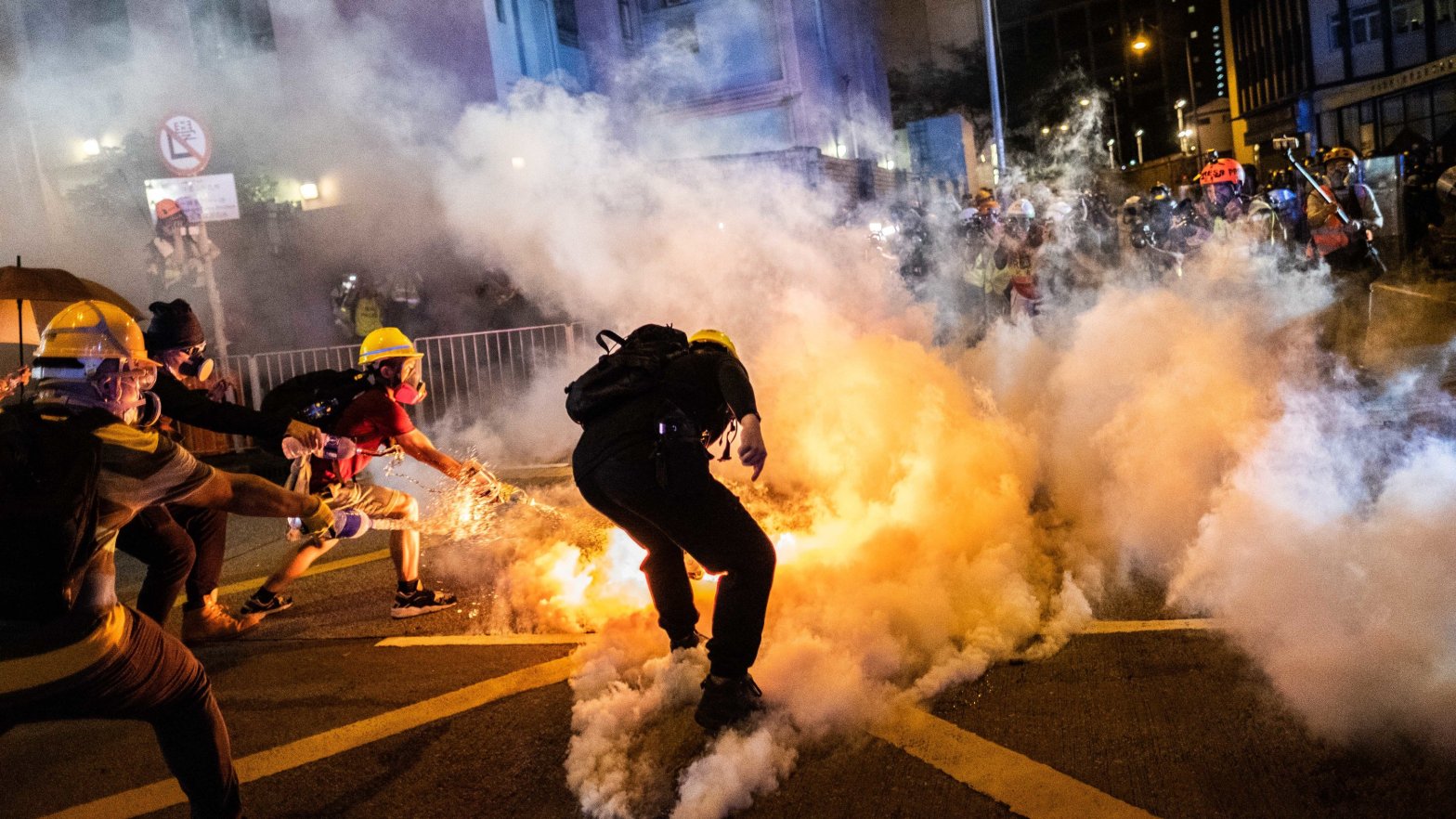

“People used to say the society of Hong Kong is very indifferent, but what I’ve seen here is Hong Kong people very united…”
– Kwong Hiu Tung, 19, University Student
As Hong Kong enters its 3rd month of violent confrontation with the continuously oppressive Chinese Government’s influence, I’m fascinated over how passionate citizens have been fighting for the Island’s identity and freedom. This, for an island that has had independence for little over two decades now. In experiencing the final remnants of Hong Kong’s colonial legacy as a 9 year old, I would never have dreamt that the familiar yet slightly surreal roads I walked as a child would succumb to violence and revolt, on a scale akin to the early moments Tiananmen massacre. This is an analogy I use consciously.
The issues this small island face today cannot be understated and yet, the mainstream media outlets don’t seem to stress the danger far enough. In muting how detrimental China’s rule could be both for citizens and for the wider populous of both Europe and Asia, the Western World grossly underestimating the threat such a takeover could pose to international security.
While I don’t claim to be an expert, having experienced Hong Kong’s renewed sense of post-imperialist identity from a young age, the gap created by Britain’s exit has allowed violence and gang cultures to rise and evolve unchallenged through the Yakuza gangs. Even as a young child, walking the streets of the city at night with my family, this was something that I was acutely conscious of. For instance, the Chinese government has taken advantage of the rise of the Triads and Yakuza by allowing import drug controls less stringent, making the island a haven for gangs to set up their base of operations, all the while validating unofficial Chinese rule over Hong Kong’s inhabitants through the excuse of safety.
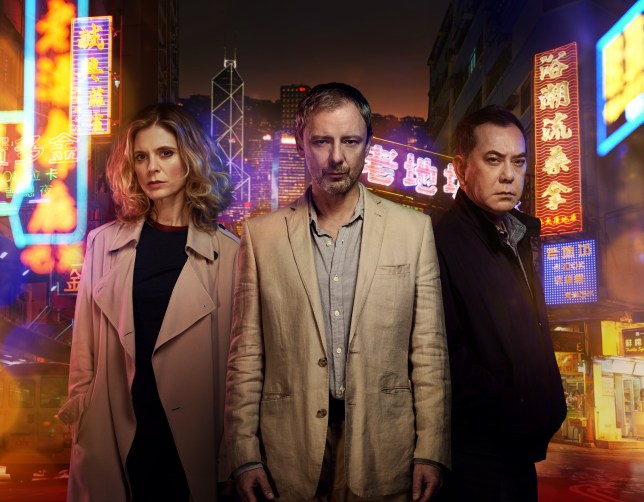
This is perfectly captured in last year’s the hit ITV programme Stranger (2018, Paul Andrew Williams) which covertly portrays the real-life concerns of citizens using the façade of serialisation. The amount of corruption, violence and even espionage taking place on the island today as a consequence of the aged and weakening infrastructure has enabled China to gain a tighter grip on the city than ever.
(Source: Metro Online)
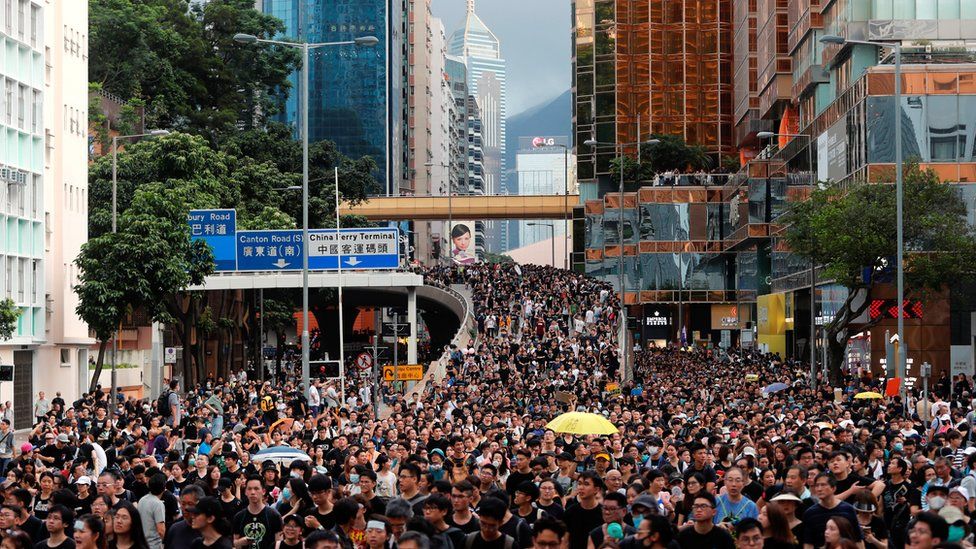
In the midst of all of this, Eurosceptics may seek to draw similarities between this and Britain’s desire to leave the EU. No doubt the circumstances are different, and no doubt at some point in the coming weeks and months, when the violence turns bloody, this will be the metaphor used. I can understand why. As a similar island people, both have considered mainland rule a threat and subsequently, desired to revolt against it. China’s excessive political controls would also be damaging to Hong Kong’s economy and trade, similar to the tariffs and regulations that we’re constantly being told have been imposed on us by the European Union. All while the island slowly becomes China’s secret drug farm. This is also why the extradition order in June was attemptedly pushed through so forcefully. It allows China to take official action against those willing to disrupt its profitable activities.
(Source: BBC)
When we talk about this revolution against China, much of the press seem to stress the economic virtues based on it. But, Hong Kong’s fight is not simply for financial independence, instead it’s a national call for the democratic freedom to express their culture freely.
In the past 20 to 30 years, the decline of colonial influence has enabled the island to further enhance and develop its socio-political state, so as not to be in-line with either China or Britain, but to have and maintain its own democratic way of governing.
In allowing the country to self-govern without help or supervision, Britain has arguably weakened Hong Kong’s ability to resist China’s slow but powerful infiltration. Furthermore, not only does it epitomise the shortfall of Britain’s outdated decolonisation philosophy, but responsibility should be seen to land solely in the British Government’s hands. It also highlights how much of a threat China is willing to make on the global stage.
(Source: The Guardian)
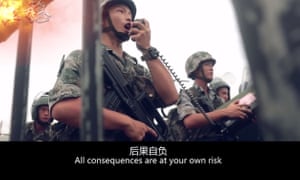
This was further reciprocated last Friday (2nd August 2019), with the release of a video by the Chinese army, gravely warning to protesters that ‘All consequences are at your own risk’, clearly aiming to echo rhetoric from their Cold War campaign of intimidation. With such a politically charged atmosphere world-wide at the moment, such a declaration isn’t only designed to highlight their willingness to demonstrate their firepower, but more-so to deliberately illustrate how much of a threat they pose on the world stage. As Hong Kong contains vital financial and political links to the west, using the island as a spring board is clearly strategic in attempting to further extend China’s influence in global markets. For instance, through allowing Yakuza gangs to dominate Kowloon, which forms part of the main financial sector of Hong Kong, the Chinese-sympathising authorities enable the disparity between the wealthy and the poorer to exacerbate the disparity of wealth within the area, stretching people to their socio-economic limit. This consequently validates their attempts to exert control over the island through drawing attention to this disparity and making false promises that this gap will be closed under their guidance. This also shows how vulnerable and desperate China is to maintain control over the island. Almost comically like ‘Spectre’ in the James Bond film series, the governments desire to protect interests in the region have forced their political elite to suppress coverage on a mass scale, and in keeping the media profile low, it also exacerbates how influential China’s political elite are.
The aforementioned Chinese influence/sympathy clearly comes across in the quote used on the 2nd August publication of the guardian, in which Hong Kong Army Chief Chen Daox states rightly that ‘These incidents threaten the life and safety of citizens.’ While the quote seems accurate and benign enough, if you put into context of the whole article on the circulation of the Protesters warning video, it becomes much more sinister and arguably reinforces what the article refers to as ‘public anger over the use of force by police’ and the subsequent civil unrest it’s caused.
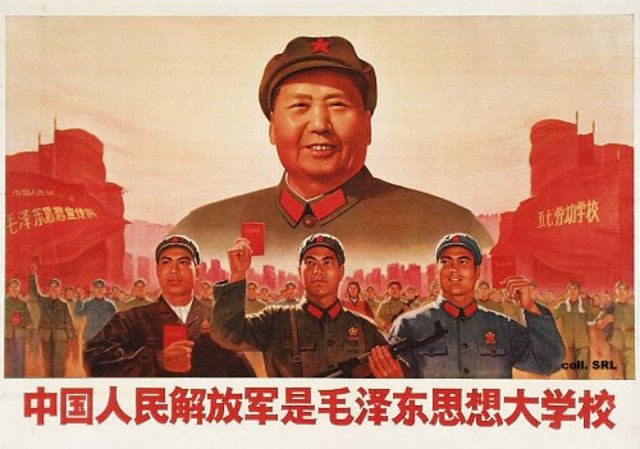
(Source: TimeToast)
What’s clear throughout all of this is China’s desire to exert greater influence has been one of the continuing threats since the cold war that is only now becoming realised. Without aid and the correct style of negotiation, it’s possible events could become much worse.
 72° from Chippenham
Interesting take on the whole matter! Especially for someone like me not too well-versed on the history of the region, this read gave me that quick recap of Hong Kong’s backstory to help me understand the conflict better. Much appreciated!
LikeLike