Anxie-tea and Biscuits: Living with worry.

As a second-year university student, the ideal that many idealise of living life on a whim every day seems like a distant, if not romanticised prospect. For many of my contemporaries, this pre-supposed idea is far from the truth. We do however have one common lifestyle that unites us and many others across the country. We all live with anxiety. Myself an avid member of this broad community of worried individuals, I feel like I’m able to provide an broader scope to understand what it means to be anxious and consequently how people can deal with it but also how we need to challenge perceptions around these now societally ingrained issues.

“A university degree in 2019 only brings £30,000 debt and a mental disorder to boot.”

The problem at its core comes from the structure of academia and the emphasis that assessments currently have in the wider university experience. Many students feel almost claustrophobic with the expectance of assessments around every corner; with every new month bringing greater and greater pressure to do well, the supposed end goal being a degree that people say open doors to new places and opportunities. While this may be the case for students before the advent of social media, having seen students myself struggle after graduating, a university degree in 2019 only brings £30,000 debt and a mental disorder to boot.

Paul Smith takes advantage of this on Instagram to extenuate their identity-driven fashion style
(@paulsmithdesign)

I mention social media because much of this pressure also sparks from the synthetic accounts people cultivate to present an unauthentic version of themselves that other students compare themselves to without considering the context and issues behind these profiles. We live in a world constantly pushing ideas towards us. Adverts, politics, new ideologies, religions and genders. All these aspects attempt to accomplish by being on social media is to convince us of a lifestyle, a perfect image or idea, similar to that of newspapers that is ultimately and realistically unattainable. In attempting to find this perfect existence, it’s apparent everybody is pining for their own identity. In such a world where conformity is to be a death sentence for style, it is only natural for these pressures to become too much to bear.

From experience, these manifest in two main ways. Overthinking of how I look to other people and emotional anxiety. In slowly but surely tackling these problems, through talking and challenging these issues head on, this struggle has made a more resilient person and has arguably played a vital role in cultivating who I am today.

In my opinion, the different way anxiety affects people derrives from the way in which they function with it and what the source of their anxiety is. Our perceptions of ourselves and the issues around us are amplifications of the reality we are living in. Many have anxiety on what their role in society is, or what their role in their partner’s relationship is. To tackle this is hard. It primarily comes from what we say and how we say it to people around us. I have been the victim of numerous times and saying the wrong thing to the wrong person which subsequently affected my relationship with them. All of it owing to the perceptions I had of myself and of them. It alters the way you act around different people and debilitates how we understand different situations. This, in addition to our behest towards an ever-changing indigenous society unforgiving for past mistakes, means that any false move can spread like wildfire and can subsequently be inflated way beyond its original form. This is arguably why small-form platforms like Vine or Tik-Tok existed or currently exist.

TikTok and Vine provide a
platform for short but effective
entertainment. Is its effect
good or bad?

There is no leverage or acceptance of forgiveness, there is no continual emphasis on rehabilitation, only condemnment and ignorance. Subsequently when somebody makes a mistake, we vilify them, ignore all the good things that they had done previously to isolate and alienate them, in view of the effect they supposedly have on the society around them.

While conditional to the mistake they made, it is illustrative of the same problems that lead to anxiety within young people today. The pressure, the lack of either understanding or acceptance, these are still problems affecting young people and their social confidence. As mentioned earlier, the ramifications can be ever-present, long after the problem is resolved.

Stress is a long lasting and potentially debilitating problem that many young people are dealing with at University.

My experience of anxiety is as typical as anybody else’s, especially in the symptoms I had. The archetypal short of breath, constriction of the chest, overthinking and the dependency on caffeine and sometimes even chocolate to get through. While definitely not as hardcore as maybe cocaine or an alcohol dependency, it does lead to some phenomenal problems of excessive chocolate and tea/coffee consumption, costing a lot especially when you’re outside and need a fix.

Coffee Addict?

The problem with coffee as a post to cocaine is the fact it’s readily available everywhere and consequently means there is no way to shake it dependency. It’s the same with chocolate except chocolate has the effect of increasing your size and subsequently means that you would likely be more conscious about your body image then you were before. It’s basically catch-22 except it’s delicious. While I make light of a serious epidemic that’s taking over many young people and ruined countless lives already, I believe it’s important that we consider how to broach newer techniques of dealing with these issues head on.

Alcoholism is a side-effect of anxiety and similarly needs attention and time paid to it in view of making a delegable impact on the issue.

Without the proper infrastructure to resolve these issues, people will likely turn to these food and drink outlets, or potentially something stronger. A friend uses alcohol to stop their anxiety and would often get drunk around me and my friends just to have the courage to act normally. While I’m unfamiliar with their full background which could point to other issues that have led to this, it illustrates how much of an issue it really is. The person is only 19 years old. This is no way to live. These people are the ones left by the wayside, for society to get upset about but ultimately and ignore. It’s sad and pitiful, but these problems need addressing head-on. Infrastructure for mental health is getting better, young people are starting to see the signs and are there for each other, fostering a greater sense of community than ever before. I know people who have helped each other and held one another, both in support but then romantically, simply because they have no-one else.

Do whatever you have to, such as writing to your local MP just make your voices and dissatisfaction heard.
(Michelle Donelan, MP for Chippenham)

We need to tackle anxiety head-on and keep understanding that we are able to live happier, healthier lives in university where the pressures of studying don’t debilitate us into simply crawling into bed around a hot water bottle or drinking 3 bottles of vodka to makes us feel remotely normal. It isn’t right and consequently why we need to call for greater funding and more expansive mental health support infrastructure. Write to your MPs, talk to your Student Representatives, speak to your University’s student unions. Make yourselves heard, don’t stay cooped up, go out and show why you want these problems sorted not just for yourself, or your contemporaries, but perhaps your kids later on, or your younger brothers and sisters. Go and make a difference!
Boris Johnson: Fact or Friction?

My friends, as I have discovered myself, there are no disasters, only opportunities. And, indeed, opportunities for fresh disasters.
– Boris Johnson

As a modern-day political event, Boris Johnson’s succession into Number 10 comes as a shock to nearly no-one. In the midst of democratic turmoil unmatched since the Gunpowder Plot, the ever-growing political polarisation between Leave and Remain has allowed the newly graced Prime Minister to take advantage of the rising tide of nationalistic rhetoric in politics today, in order to slip past our line of view. In search of bettering his own political career, his actions and the actions of those around him have been conducive in further validating the recent increase of far-right activity and the subsequent decline of confidence and power in left-wing politics. As the inept figure of Jeremy Corbyn looms large on the horizon, the power the current conservative government can exercise in deciding the future for millions of people and countless generations should concern us gravely.

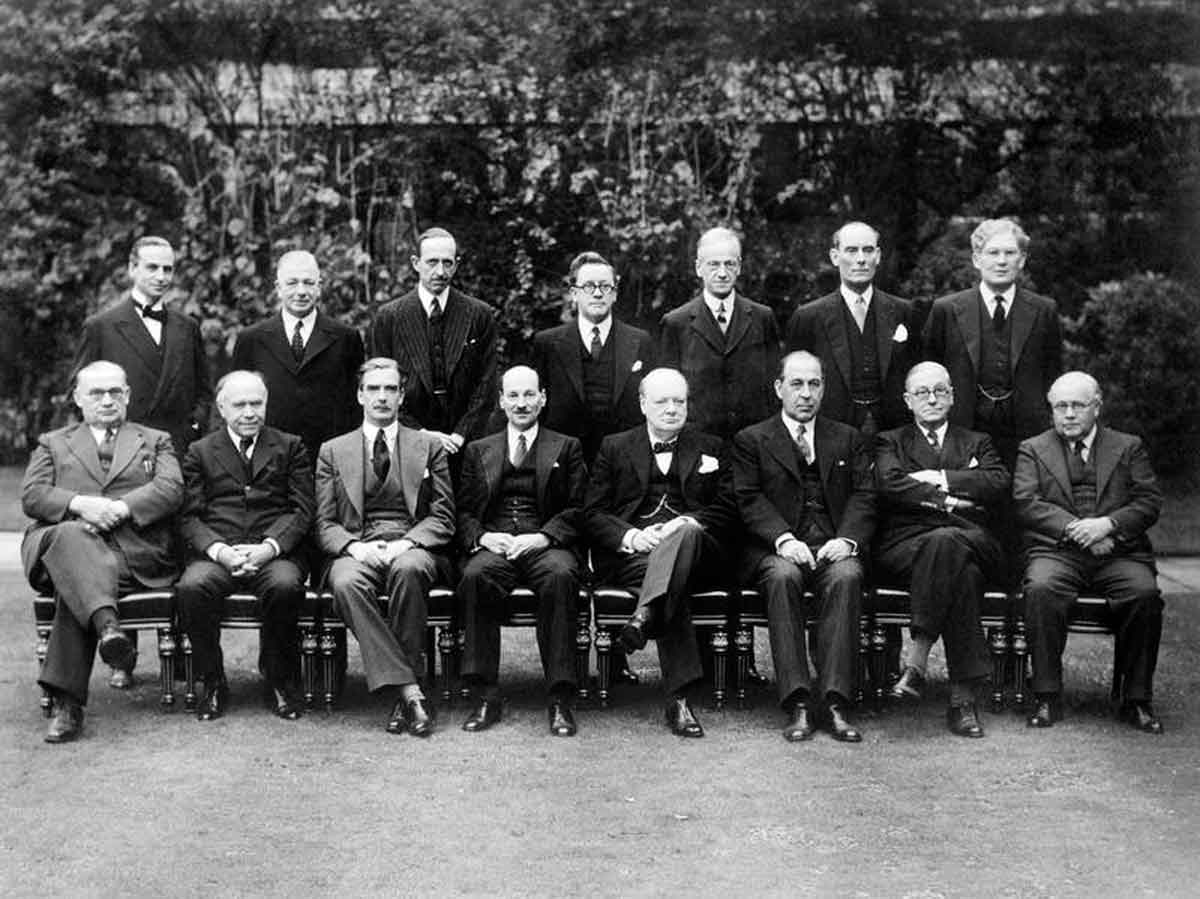
The Churchill Coalition Government 1940 – 1945: It showed that even in times of hardship and disagreement, we are strongest as a country united
(Source: WW2 Today)

Ultimately, the fundamental issue is that as a nation, we aren’t able to commit to a consensus political structure as we once could have, such as during the early post war period. The subsequent partition created between the right and left has led to any political middle ground become less important and less likely to win over the voting populous. For instance, the failure of Jeremy Hunt arguably stemmed from his inability to commit to a leaving date on the 31st October, something Johnson capitalised on during the debates by stating that he would take Britain out ‘with or without a deal’ by the end of October. Hunt’s failure to gain nearly half as many votes as Johnson says a lot about both Johnson’s right-wing agenda and its appeal today as well as the continuing political split running down the middle off the U.K. at this time.

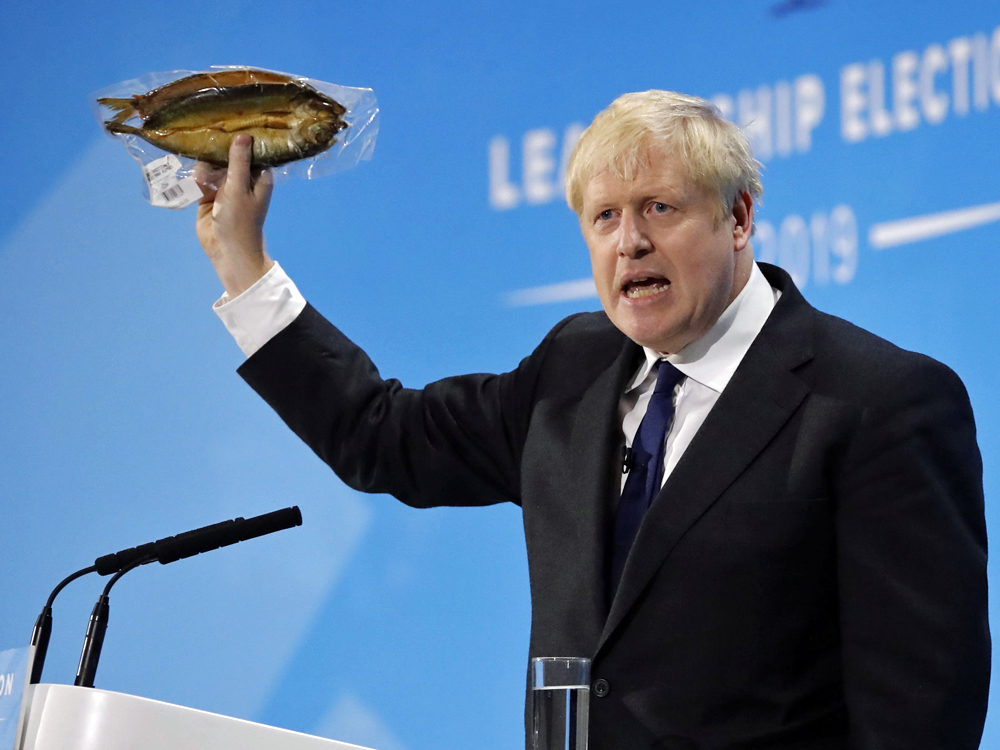
I believe that while utilising the allies forged during his early days at Eton and later, as a political Journalist, he has consolidated his power in the same ‘democratic’ way Stalin did during the race for Leadership of the Bolshevik party in 1924.

Johnson’s Cult of Personality perfectly exemplified by his fish demonstration at the Final Conservative Hustings
(Source: National Post)

Similarly to Stalin, he has used his background as a basis from which he built his ‘cult of personality’. Always conscious of public image, presenting himself as the typical ‘everyman’ by messing his hair up intentionally and acting Coy when interrogated by reporters.

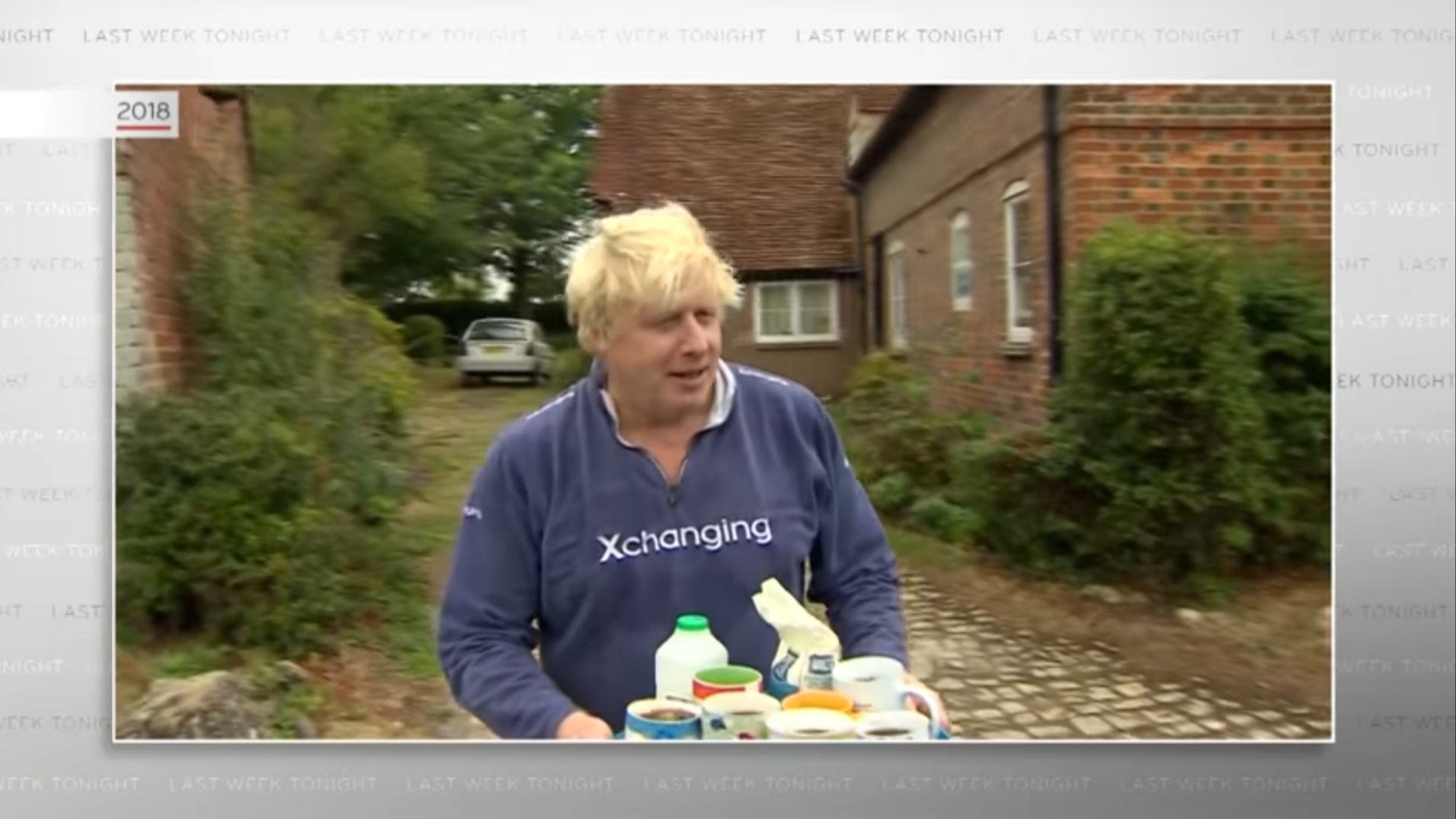
While the political circumstances are ultimately different, and Johnson hasn’t (yet) started painting David Cameron or his beloved Brexit bus out of the history books, Political Satirist John Oliver perfectly captured his ability to manipulate the political reality surrounding him in a segment on Last Week Tonight (HBO, 2019) by using the example of when reporters confronted Johnson at his country home. He uses the intentionally loud and often outlandish clothing, coupled with offering waiting reporters’ cups of tea to deflect any attention away from his comments at the time about likening Muslims to ‘letterboxes’. It’s this carefully curated political image that has allowed Johnson to amass so many followers and believers in him.

John Oliver’s segment on Johnson really provides a clear insight into how he has manipulated his public image
(Source: Last Week Tonight)

However, it is the typical political Cliché of what we don’t see and how Johnson has manipulated politics among his party behind closed doors that remains equally important and should also be considered when reflecting upon both his character and his ability to govern. In taking advantage of the ties he had with Eton College London, as well as his close relationship with senior members of the Oxford Union, becoming its president as a consequence, Johnson has secured a great number of alliances with people who have become fore players in today’s political landscape. For instance, Conservative party members such as Michael Gove, Andrea Leadsom and Dominic Raab all had close interactions with him during or around the time of his success at Eton and after, during the early year of his Journalistic career at The Daily Telegraph (U.K.).

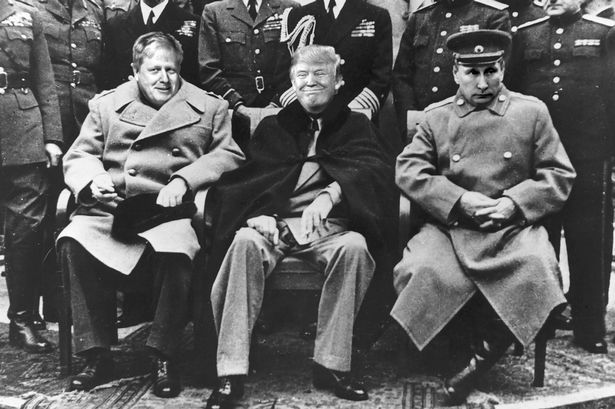
Johnson’s art of the deal
(Source: Newsweek)

This enabled him to cultivate the necessary repartee among the power political circles previously denied to him by his failed stint at The Times (U.K.). Further allowed by his Editor and former colleague from Oxford Conrad Black, it has given Johnson the chance to model the typical divisive political strategy we have come to expect from him in recent years. The perfect example of this comes in the juxtaposition of his support for Tony Blair’s aid and involvement with the United States during the Iraq War in 2003. Johnson become one of the main politicians to encourage Tony Blair’s unsuccessful impeachment in 2004, which he remarked as being a ‘colossal mistake’[1]. Its this type of political leapfrog that surreptitiously allowed Johnson to get away with making some truly outrageous statements on Religion, racial diversity and sexuality, arguably enabling him to gain enough support to become prime minister.

There is little doubt that we know so how the events of the next 6 months, including Brexit, the Iranian troubles, and the weakening level of the pound against the dollar will unfold.
What we do know however is the approach Johnson will take is one of a similar way that Donald trump has in his own political strategy. as with the democrats, conservatives split down the middle between those who support Boris and those who lamenting. This is evidence by the continuing resignations of ministers as he succeeded into power. This division is what got him to number 10, and potentially what would drive him out.


[1] Andrew Gimson, Boris: The Rise of Boris Johnson, 2nd Ed., (Simon and Schuster, 2012), p.265

Last Week Tonight Boris Johnson segment:
https://youtu.be/dXyO_MC9g3k?t=858

Hong Kong’s Fight for Identity and Individuality

“People used to say the society of Hong Kong is very indifferent, but what I’ve seen here is Hong Kong people very united…”
Kwong Hiu Tung, 19, University Student

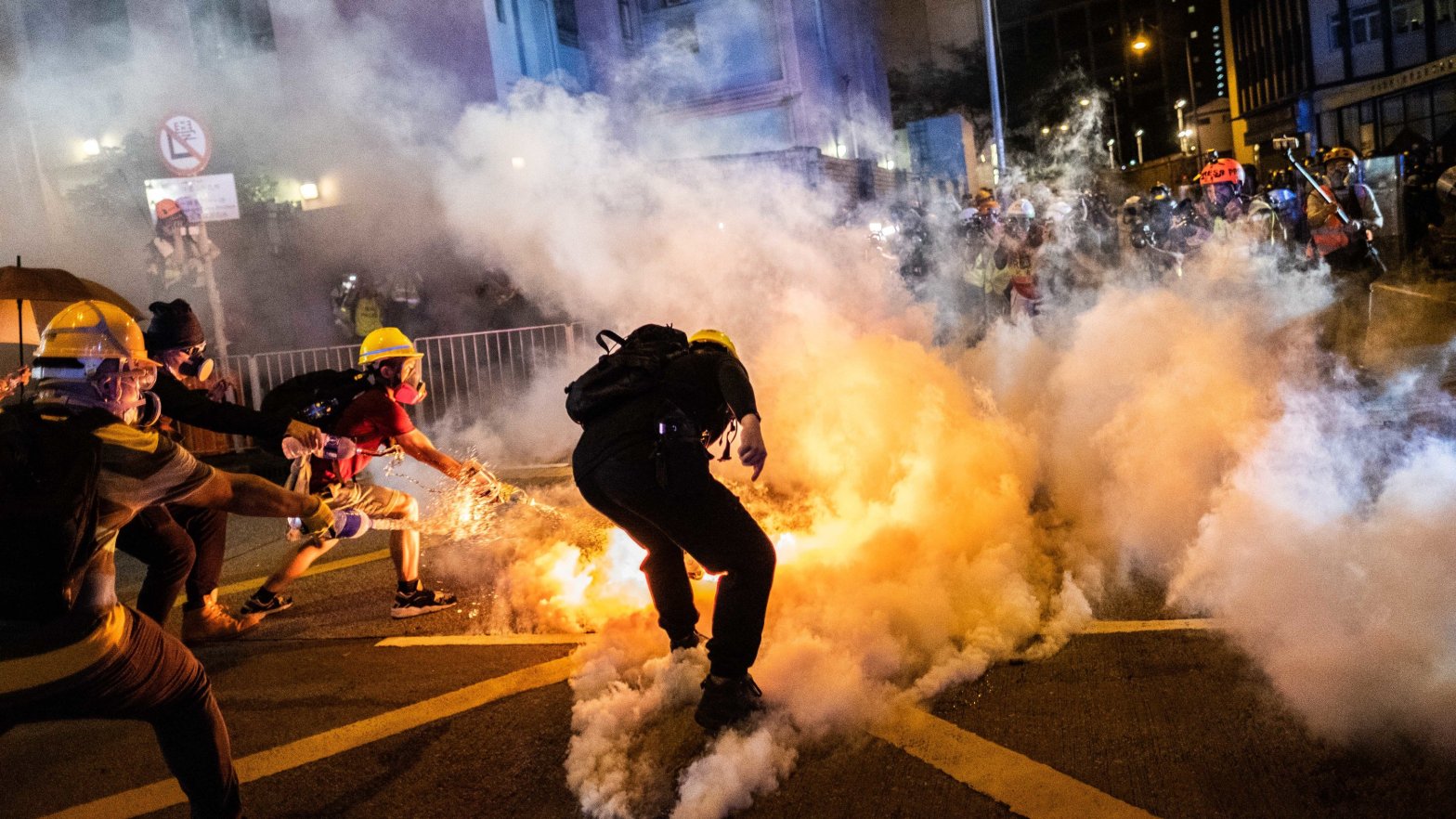
As Hong Kong enters its 3rd month of violent confrontation with the continuously oppressive Chinese Government’s influence, I’m fascinated over how passionate citizens have been fighting for the Island’s identity and freedom. This, for an island that has had independence for little over two decades now. In experiencing the final remnants of Hong Kong’s colonial legacy as a 9 year old, I would never have dreamt that the familiar yet slightly surreal roads I walked as a child would succumb to violence and revolt, on a scale akin to the early moments Tiananmen massacre. This is an analogy I use consciously.

The issues this small island face today cannot be understated and yet, the mainstream media outlets don’t seem to stress the danger far enough. In muting how detrimental China’s rule could be both for citizens and for the wider populous of both Europe and Asia, the Western World grossly underestimating the threat such a takeover could pose to international security.

While I don’t claim to be an expert, having experienced Hong Kong’s renewed sense of post-imperialist identity from a young age, the gap created by Britain’s exit has allowed violence and gang cultures to rise and evolve unchallenged through the Yakuza gangs. Even as a young child, walking the streets of the city at night with my family, this was something that I was acutely conscious of. For instance, the Chinese government has taken advantage of the rise of the Triads and Yakuza by allowing import drug controls less stringent, making the island a haven for gangs to set up their base of operations, all the while validating unofficial Chinese rule over Hong Kong’s inhabitants through the excuse of safety.

This is perfectly captured in last year’s the hit ITV programme Stranger (2018, Paul Andrew Williams) which covertly portrays the real-life concerns of citizens using the façade of serialisation. The amount of corruption, violence and even espionage taking place on the island today as a consequence of the aged and weakening infrastructure has enabled China to gain a tighter grip on the city than ever.

While dramatised, Strangers provides a good emulation of the post-colonial influence of China in Hong Kong
(Source: Metro Online)

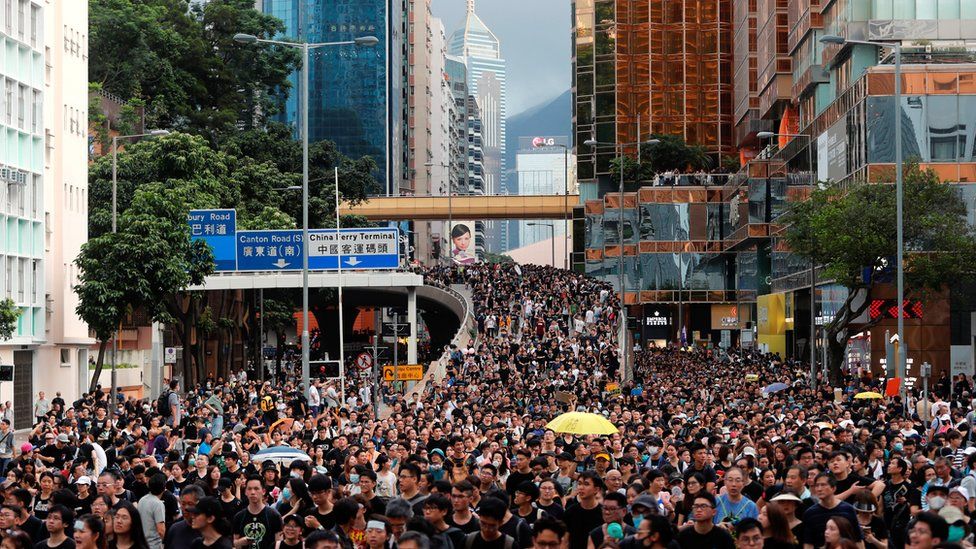
In the midst of all of this, Eurosceptics may seek to draw similarities between this and Britain’s desire to leave the EU. No doubt the circumstances are different, and no doubt at some point in the coming weeks and months, when the violence turns bloody, this will be the metaphor used. I can understand why. As a similar island people, both have considered mainland rule a threat and subsequently, desired to revolt against it. China’s excessive political controls would also be damaging to Hong Kong’s economy and trade, similar to the tariffs and regulations that we’re constantly being told have been imposed on us by the European Union. All while the island slowly becomes China’s secret drug farm. This is also why the extradition order in June was attemptedly pushed through so forcefully. It allows China to take official action against those willing to disrupt its profitable activities.

Kowloon stands strong now as it did when the expedition law was on the cards
(Source: BBC)

When we talk about this revolution against China, much of the press seem to stress the economic virtues based on it. But, Hong Kong’s fight is not simply for financial independence, instead it’s a national call for the democratic freedom to express their culture freely.
In the past 20 to 30 years, the decline of colonial influence has enabled the island to further enhance and develop its socio-political state, so as not to be in-line with either China or Britain, but to have and maintain its own democratic way of governing.

In allowing the country to self-govern without help or supervision, Britain has arguably weakened Hong Kong’s ability to resist China’s slow but powerful infiltration. Furthermore, not only does it epitomise the shortfall of Britain’s outdated decolonisation philosophy, but responsibility should be seen to land solely in the British Government’s hands. It also highlights how much of a threat China is willing to make on the global stage.

Propaganda aimed to intimidate
(Source: The Guardian)

This was further reciprocated last Friday (2nd August 2019), with the release of a video by the Chinese army, gravely warning to protesters that ‘All consequences are at your own risk’, clearly aiming to echo rhetoric from their Cold War campaign of intimidation. With such a politically charged atmosphere world-wide at the moment, such a declaration isn’t only designed to highlight their willingness to demonstrate their firepower, but more-so to deliberately illustrate how much of a threat they pose on the world stage. As Hong Kong contains vital financial and political links to the west, using the island as a spring board is clearly strategic in attempting to further extend China’s influence in global markets. For instance, through allowing Yakuza gangs to dominate Kowloon, which forms part of the main financial sector of Hong Kong, the Chinese-sympathising authorities enable the disparity between the wealthy and the poorer to exacerbate the disparity of wealth within the area, stretching people to their socio-economic limit. This consequently validates their attempts to exert control over the island through drawing attention to this disparity and making false promises that this gap will be closed under their guidance. This also shows how vulnerable and desperate China is to maintain control over the island. Almost comically like ‘Spectre’ in the James Bond film series, the governments desire to protect interests in the region have forced their political elite to suppress coverage on a mass scale, and in keeping the media profile low, it also exacerbates how influential China’s political elite are.

The aforementioned Chinese influence/sympathy clearly comes across in the quote used on the 2nd August publication of the guardian, in which Hong Kong Army Chief Chen Daox states rightly that ‘These incidents threaten the life and safety of citizens.’ While the quote seems accurate and benign enough, if you put into context of the whole article on the circulation of the Protesters warning video, it becomes much more sinister and arguably reinforces what the article refers to as ‘public anger over the use of force by police’ and the subsequent civil unrest it’s caused.

China’s policy towards Hong Kong echoes its own Cold War Foreign policy of expansion, and should be watched closely
(Source: TimeToast)

What’s clear throughout all of this is China’s desire to exert greater influence has been one of the continuing threats since the cold war that is only now becoming realised. Without aid and the correct style of negotiation, it’s possible events could become much worse.

Tokyo in Focus: A city in evolution

The heart of the cultural crucible.

As a cultural crucible between American, European and East Asian influences, Tokyo has for a long time been a place idealised by travellers and merchants alike. While you shouldn’t expect to see Geishas around every corner as the tourist board would have you believe, the diversity under which the city has allowed itself to develop still provides a unique glimpse into a typical Japanese lifestyle, without straying too far from a comfortable frame of reference.

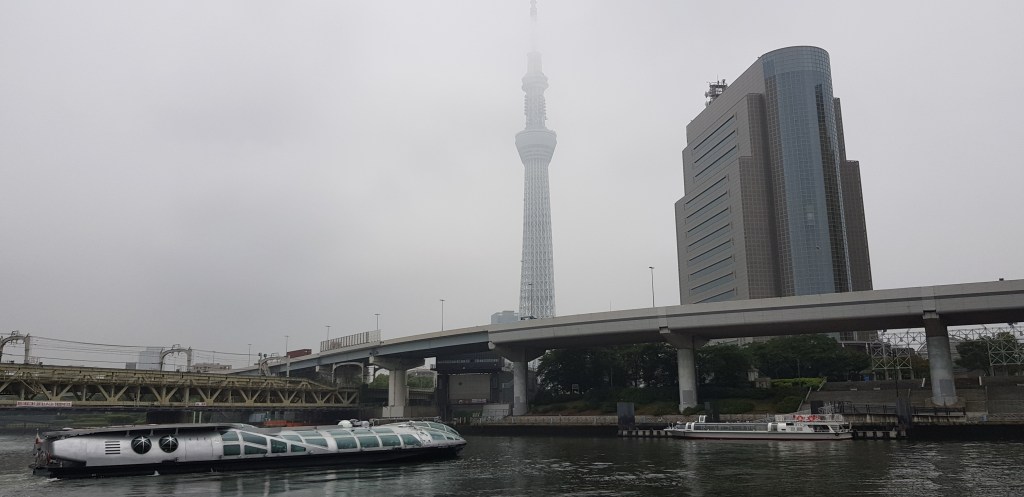
Visibility on a typical day in the City.

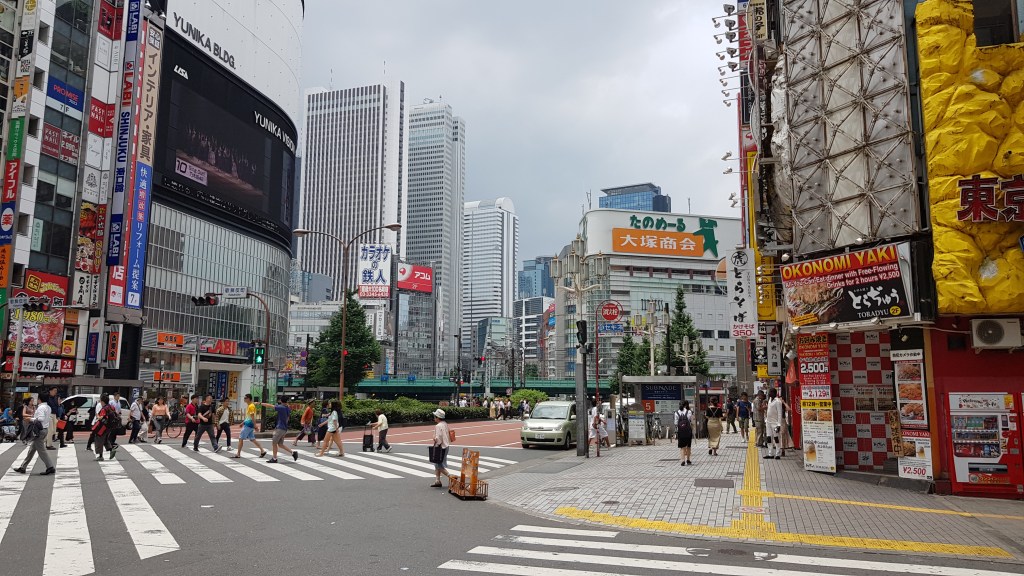
In an area often covered by smog and mist, a sense of scale is hard to achieve on the ground in Tokyo. This is why either seeing it from afar, or at a high altitude is the best way to enjoy the city in brief. As a modern day metropolis, qualities of London, New York and even Paris are seemingly replicated without disrupting the overall flow of the skyline. From the traffic quietly shuffling around vast tower-blocks at rush hour, to the small yet distinct side streets housing sushi houses and boulangeries, the skyline is as (diverse as its inhabitants.

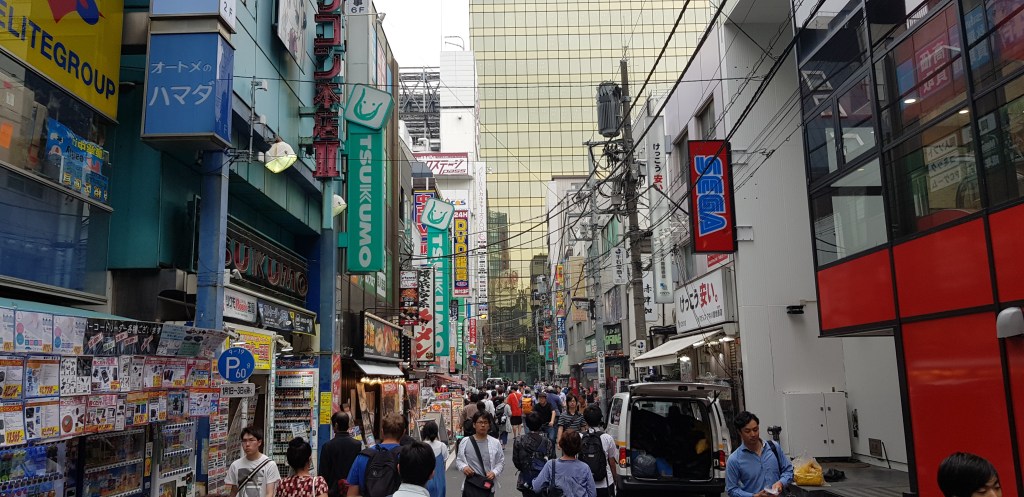
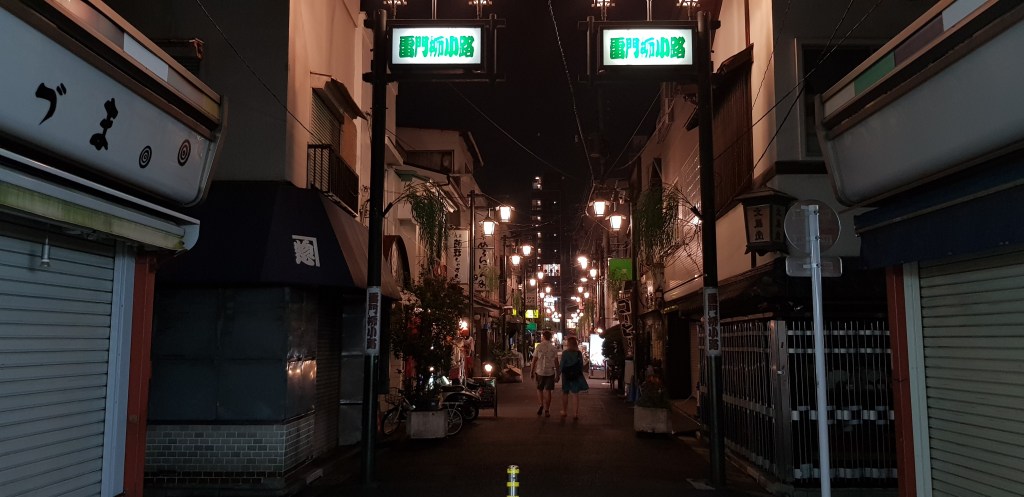
Inclusivity is everywhere across Tokyo, even down its characterful side-streets, evidence is everywhere for this metropolitan megacity.

As ever with a population as inclusive as Tokyo’s, there also comes the variety of language. While perceptions of Japan, certainly from an English perspective, emphasise the variation in language and culture from that of our own, it may refresh worried travellers unfamiliar with Japanese that the second most predominant language in Tokyo is English. Honestly, if you’re able to read this effortlessly, you’ll be able to get around Japan just fine. As mentioned earlier, this is again a symbol of the continuing evolution of Japan and the cultural developments it’s endured. From a purely selfish perspective, I felt a little disappointed by how extensive English was utilised across Japanese public services, as I nearly felt I could have been anywhere in Europe or America with how extensively its used (I say nearly for good reason). But there’s no escaping the harsh reality that it remains such a major asset for tourists and new-comers who would otherwise struggle, you’re almost inclined to forgive the city for it. In reality, the contrast Western influences have against a backdrop of traditional Japanese culture give Tokyo a unique feeling unable to be replicated anywhere else.

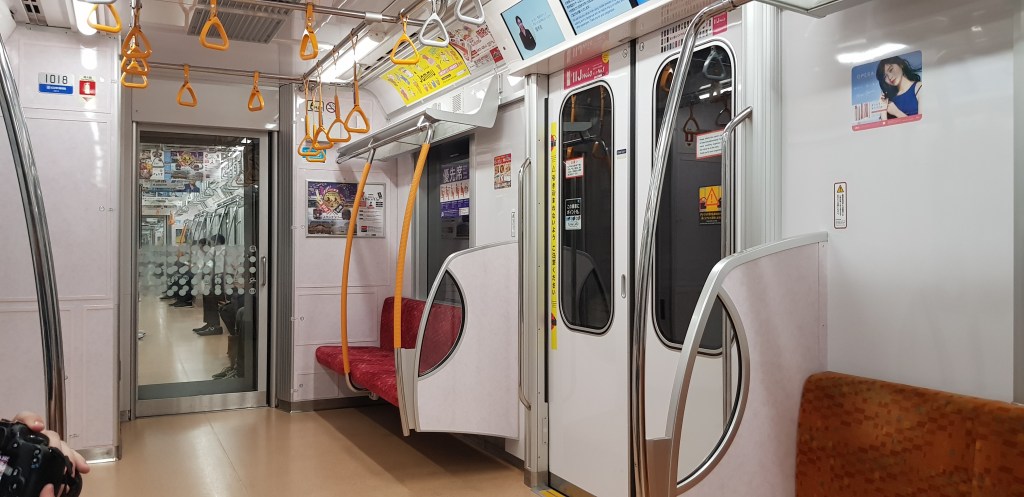
While 6 1/2 hours may seem like a lot, the seats are actually quite comfortable.

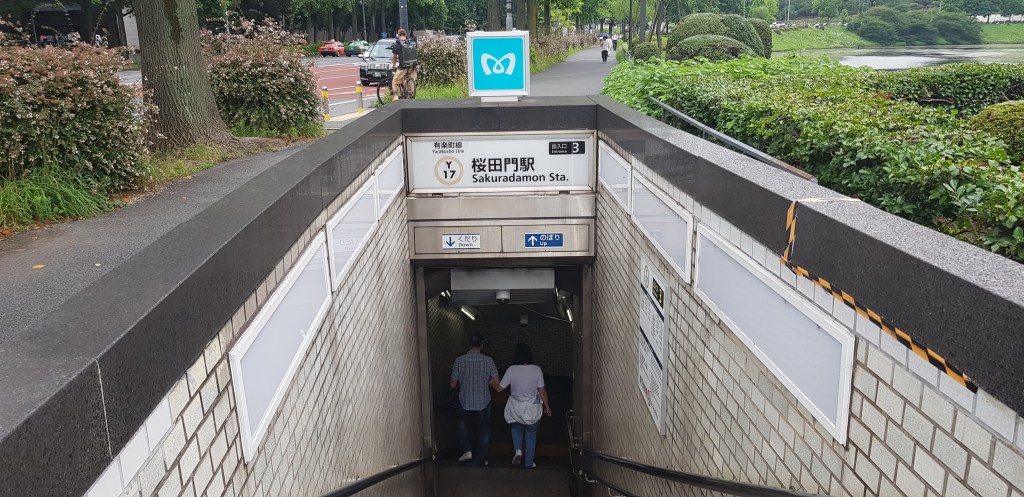
A perfect example of this comes from how you travel around the city. ON average, Japanese workers spend over 6½(1) hours a week commuting to and from work in Tokyo. This clearly forms a considerable part of people’s lives and is subsequently why it’s such an experience as an outsider to be part of. On the surface, the Tokyo Metro system is seemingly less interesting than other subways around the world, with a lack of any station insignia, primarily keeping to the Japanese trend of minimalist design. However, a clue to its individuality can be found when you enter a station. While the lack of any station identity makes it less iconic than that of London’s own Underground, descending into its depths is often accompanied by the continual tweeting of birds. Played on loud speakers dotted around the stations and platforms, its primary aim is to keep commuters awake and alert. When first experiencing this, it comes as a little bit of a shock, especially when you’re used to watching out for birds on the Tube. You expect a Sparrow to come flying past your head but it never comes. Strange yet slightly charming (if you’re not in a rush to get to a meeting on time).

A rubbish-free subway!

Another aspect that made me fall in love with this country was how clean and well-kept everything was. The level of pride people had in keeping the streets and public services clean fascinated me, an (almost) Londoner used to seeing litter, crisp packets and bottles rattling around the tube system. This isn’t the way in Japan. Everything is spotless throughout each station, almost making you forget that millions of commuters use it every day. With everything so surprisingly clean, the flow between street and metro becomes seamless. Odd though it sounds, as I strode down streets stretching further than the eye could see, I found the lack of rubbish made the satisfying city design all the more prominent.

Satisfying city design at its best!

To the occasional reader, it may make Tokyo sound almost dream-like. In many ways, it rather is. 24 hour 7-elevens around every corner, a beacon to wary travellers, casually placed boulangerie on the corner, the smell from which would make a French person blush.

What’s clear in reality is that all these small things cumulatively give Tokyo a reassuring atmosphere that allow travellers to safely experience different facets of Japanese culture without straying too far into unfamiliar territory. As simply a cultural experience, Japan is unique. Always astonishing, continuously fascinating, occasionally confusing, but a true gem to experience first hand.


(1) Source: https://resources.realestate.co.jp/living/average-work-commute-time-japan/


A little intro…

Chippenham is a small town just outside Bath, in the U.K. It has the perfect amenities for young people to grow up in, safety, swimming pools, stations galore, shops and some great views on hot summer’s days. However, it isn’t what someone would call ‘inspiring’. It’s sleepy, calm, and hardly anything exciting happens here, at least as far as I know.

When I was younger, I would always walk in fields around the top of our town and usually, if it was clear enough, you could see all the way across the county. While it does remain a beautiful view, I always felt Chippenham was the typical small town that everybody deals with at sometime or another in their lives. I had always wanted to see the world, and as a Kid, its normal to have that ambition. Yet, what isn’t is actually going to these far away places we dream of when we’re kids and experiencing them with the same wonder we had.

In going to some truly wonderful places from a younger age than most, I gained valuable insight and cultural awareness that for the most part, we all have when we’re adults. But, what sets my experience apart from others is the detail you experience things with and the odd things that caught my attention when I was younger. Today, in a society dominated by discourse of equality, justice and representation, these odd things have become greater and more provocative to me than ever.

As I report on issues, culture and social experiences as viscerally as possible, I aim to show both the good and the bad, subvert your expectation, and highlight that while we should always keep an open but interrogating mind.

For better or worse, Chippenham is still home for me. But living in London has opened my eyes and encouraged me to show people the world as it really is, both wonderous and the crazy alongside the issues and injustices.

Getting out of your comfort zone and enjoy what life has to offer is one thing, using it to bring people’s attention to problems, is another. I aim to do the latter.

Design a site like this with WordPress.com
Get started